Press release

Color
Light blue

Has the UEG found the format?

Category
Lead image
Paragraph
Body

The 6th European Championships in Artistic Gymnastics, organised mid-April in Montpellier, was extremely successful on a sports, popular and media level. They express what the European Union of Gymnastics (UEG) attempts to initiate in order to modernise its competition formats and gain in attractiveness.

At the time of the debriefing, European gymnastics learns its first lessons and establishes the first criteria which absolutely must be retained for tomorrow’s competitions.

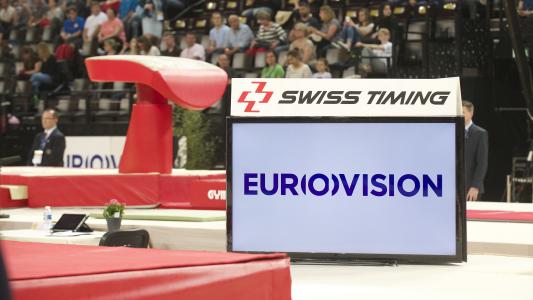
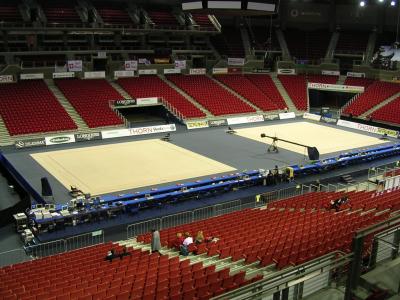
The UEG is of the opinion that a minimum should be respected with regard to the quality of the place where the championship is organised. This technical level concerns first of all the conditions offered to the gymnasts, the quality of the installations reserved for the media, the comfort of the spectators. The competition format used in Montpellier gave satisfaction. Alternation as well as the dynamics of the exercises and the TV realisation were very satisfying for Eurovision, partner of the UEG.

The UEG President, Georges Guelzec (FRA) underlines the efforts made by the organisers who knew how to attract thousands of spectators to the tribunes of the Park & Suites Arena.

A quality venue, an attractive competition format, a motivated and participating public represent the first elements of a success as the one the UEG enjoyed in Montpellier and which the UEG intends to develop even further, in particular for 2016 in Bern (SUI), host of the next European Artistic Gymnastics Championships. 

Date
Show everywhere on the website
On

Spectacular progression!

Category
Lead image
Paragraph
Body

Eurovision (EBU), exclusive partner of the European Union of Gymnastics (UEG), published its statistics of visits to its digital platforms and social media networks during the recent European Championships in Artistic Gymnastics in Montpellier (FRA) and in Rhythmic Gymnastics in Minsk (BLR). The raw numbers indicate an increase of 50% and 25% respectively, in comparison to the same events in 2014.

These numbers confirm the several positive echoes received from different sources – spectators, media, officials, gymnasts- after the competitions. When hearing about this progression, UEG President, Georges Guelzec (FRA), didn’t hide his satisfaction.

Text

I’m happy with these results. It sheds new light on the effects of the first steps the UEG has taken to boost its competitions. It also encourages us to go even further with our reforms.

Body

Commenting on the results, Mrs Kirsi Erofejeff-Engman (FIN), Director of the UEG, relevantly notes that in recent months the UEG has intensified its communication efforts towards its young audience connected.

Text

These collateral measures certainly have their share in this increase in audience on the different social networks.

Date
Show everywhere on the website
On

European gymnastics looks to the future

Category
Lead image
Paragraph
Body

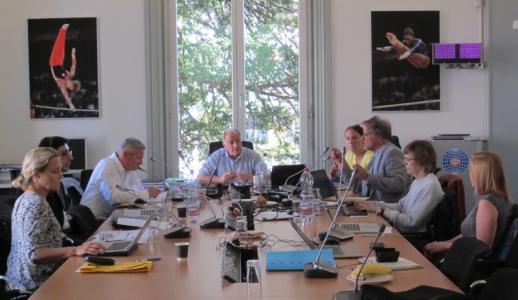
During its meeting in the Olympic Capital Lausanne, the President’s Board of the European Union of Gymnastics (UEG) engaged in an ultimate examination of the organisation of the 1st European Games, which will begin on June 12 in Baku (AZE). The UEG President, the Frenchman Georges Guelzec emphasises the political challenge of the event, to the extent that the UEG plays an important role in the strategy to reform competition formats. 

Text

All eyes will be on us! » the President notes, before adding: « We have taken on the challenge of the modern times, conscious that Baku is just the first step towards a more dynamic and spectacular gymnastics, which our audience and the media calls for.

Body

In this context, the advice and recommendations from experts were sought in order to draw the framework in which competitions should be organised in the future. It’s obvious from the first round of the table that the quality of the venue, the quality of TV production and the show element offered to the spectators fall under the priorities of the UEG. The creation of a pool of international professionals in these fields has been raised, as well as a reflection on the allocation procedure for future events.  

As a former international gymnast, President Guelzec knows that the athlete must remain the focus of attention.

Text

Like the audience, the gymnast supports all initiatives that improve the quality of the performance for the audience. The measures we will propose will be in perfect coordination with the athletes. 

Body

In this capacity, he will meet in Baku with the President of the FIG’s Athletes’ Commission Jani Tanskanen (FIN). 

Date
Show everywhere on the website
On

For more transparency

Category
Lead image
Paragraph
Body

The judges’ draw at European Gymnastics Championships will, from now on, be executed in the presence of the 3 members of the Jury of Appeal. This measure, taken by the Executive Committee of the European Gymnastics Union (UEG) at its meeting on 29th May, will already be in place at the European Games in Baku (AZE). The UEG President explains:

Text

The UEG has made the choice for transparency at all levels of judging of competitions and this prompted the decision about the formation of the panel. This measure is preventive as well, in respect of sports ethics and fair play.

Body

This decision concerns all disciplines in the UEG programme.

The Executive Committee also voted in favour of integrating the 2018 European Championships in Men’s and Women’s Artistic Gymnastics in the programme of the European Sports Championships, the first edition taking place in Glasgow (GBR) from 25 July to 12 August. Gymnastics will benefit from the positive synergy of organising multiple European Championships in the same place, with the participation of lots of media, led by television. 

Furthermore the UEG attributed its 2017 Europeans in Rhythmic Gymnastics to Hungary. The event will be held at the magnificent Papp Laszlo Budapest Arena, a venue inaugurated in 2003 and which hosted the World Championships in this specialty in September of the same year.

Text

I am very pleased with this candidacy and the choice by UEG. It marks the return of the Hungarian Gymnastics Federation to the circuit of capitals with prestigious venues in which our disciplines can fully express themselves.

Date
Show everywhere on the website
On

Preview of the men’s and women’s artistic gymnastics competition at the 1st European Games!

Category
Lead image
Paragraph
Body

The first two disciplines to step onto the gymnastics podium are men’s and women’s artistic gymnastics. In these Olympic disciplines up to 88 male gymnasts (26 teams and 10 individuals) and 89 female gymnasts (26 teams and 11 individuals) will compete, from 14 to 20 June, at the National Gymnastics Arena.

Competition format:

During qualification (CI) all competitors aim to qualify for the all-around and event finals. Qualification is spread over 2 days with 3 men’s artistic gymnastics (MAG) and 2 women’s artistic gymnastics (WAG) events taking place in parallel per day and the results serve as the team standings (CIV). A team consists of 3 gymnasts, all 3 gymnasts can present their routine and the 2 best scores count towards the team total.

In the all-around final the top 18 competitors (max. 1 per country) on all events combined will compete for the title. There will be alternation between men and women. All competitors start from zero in the final.

In event finals the top 6 competitors (max. 1 per country) on each event compete. Men’s floor is followed by women’s vault and men’s pommel horse in alternation, rings together with uneven bars, men’s vault with women’s beam, parallel bars with floor; the finals end with high bar om its own. Scores from qualification don’t carry on to the final.

Alternation explained:

To make the events easier to follow for spectators both in the hall and at home, 1 gymnast will compete at a time. One male gymnast competes and while he waits for his score, a female gymnast competes. While she waits for her score, the next male gymnast performs. This way there is always a gymnast performing.

Men’s and women’s gymnastics will be in alternation during all-around and event finals. During qualifications they will compete in parallel as it would take too long in alternation.

Who to watch in Women’s Artistic Gymnastics:

The field is headlined by newly-crowned European all-around champion Giulia Steingruber (SUI) and will see the return to competition of Russian stars Aliya Mustafina and Viktoria Komova. Many teams have send new names to these Games, to let them gain experience before the important World Championships in Glasgow (GBR) in October, which serve as the first qualifying step towards the Rio 2016 Olympics.

Russia is expected to be strong with Olympics bars Champion Mustafina, 2011 World bars Champion Komova and Youth Olympic Champion Seda Tutkhalian who recently won the 4 Nations Cup in Italy. Mustafina and Komova have been out for a while and have little competition rhythm. Romania is sending Andreea Iridon, Laura Jurca and Silvia Zarzu. Germany can definitely challenge them, teaming the experienced Elisabeth Seitz up with bars specialist Sophie Scheder and newcomer Leah Griesser. Strong European gymnastics countries like Great Britain and Italy have left their most experienced gymnasts at home so it will be exciting to see how they place.  In the all-around Steingruber looks to strengthen her authority on the European scene, after her historic win at the European Championships in Montpellier last April. She has a good chance to qualify for all event finals as well. Kelly Simm (GBR) will challenge her on vault. On beam also look out for the elegant Vasiliki Millousi (GRE) and Jurkowska-Kowalska (POL).

Due to the ‘1 per country’-rule it will be a tough battle within many teams to reach the all-around and event finals.

Who to watch in Men’s Artistic Gymnastics:

Several big names are on the roster! 2015 European Champions Oleg Verniaiev (UKR, all-around and parallel bars), Marijo Moznik (CRO, high bar) and Eleftherios Petrounias (GRE, rings) will compete against Fabian Hambuechen (GER), who opted out of the European Championships to focus on this competition, and Azerbaijan’s medal hope Oleg Stepko. Russia sends a strong team of all-arounders: 2013 European Champion and 2015 runner-up David Belyavskiy, Nikolay Kuksenkov and Nikita Ignatyev. Great Britain sends a young and very talented team consisting of junior European Champions Frank Baines, Brinn Bevan and Nile Wilson. Competing without a team is Israel’s Alexander Shatilov, always a strong challenger on floor and high bar.

Competition schedule:

Podium training is on June 13 and is open to media

14 June: qualification (CI) day 1: men’s floor, pommel horse and rings, women’s vault and uneven bars, 10.00 to 12.30 and 14.30 to 19.00

15 June: qualification (CI) day 2: men’s vault, parallel bars and high bar, women’s beam and floor + Team award ceremonies, 10.00 to 12.30 and 14.30 to 19.30

18 June: all-around finals (CII): men and women in alternation, 17.30 to 20.20

20 June: event finals (CIII): men and women in alternation, 16.00 to 20.15

Follow us on:

Image
Body

All Guides (work plans) and detailed training & competitions schedules are published on our event page: http://www.ueg.org/en/event/europeanGames.html

General information about the European Games can be find on the official website www.baku2015.com

#Baku2015 is the hashtag used for all events at the European Games. For gymnastics #Baku2015Gym is used. 

Date
Show everywhere on the website
On

Preview of the rhythmic and acrobatics gymnastics competition at the 1st European Games!

Category
Lead image
Paragraph
Body

The Olympic discipline of rhythmic gymnastics will compete together with the non-Olympic acrobatic gymnastics. In Rhythmic gymnastics 99 female athletes are represented (21 individual and 13 groups) and in acrobatics 51 athletes (9 mixed pairs and 11 women’s groups) will compete, from 17 to 21 June, at the National Gymnastics Arena.

Competition format:

Rhythmic individuals: 21 gymnasts (max. 2 per country) will compete during qualification. This competition also serves as all-around final: the gymnast with the highest combined score of all 4 apparatus, wins the all-around title. With each apparatus the top 6 gymnasts (max. 1 per country) advance to the apparatus finals. All 4 apparatus pieces will be alternated in competition interspersed with Acrobatic women’s group in the first 2 rotations and mixed pairs in the last 2 rotations. Each judging panel will judge 2 apparatuses.

Rhythmic groups: During qualification 13 groups (max. 1 per country) present 2 exercises (5 ribbons and 3 clubs + 2 hoops). The combined score of these exercises will determine the all-around ranking. The top 6 groups (max. 1 per country) per exercise advance to the apparatus finals.  Groups will compete the first apparatus in alternation with women’s group balance and mixed pair dynamic, and the second apparatus with women’s group dynamic and mixed pair balance. 

Acrobatics: In qualification both mixed pairs and women’s group present 2 exercises: 1 balance and 1 dynamic. The top 6 combined results advance to the all-around final where they have to present a combined exercise. This score will be added to the qualification score to determine the all-around ranking. The top 6 results per exercise qualify to the event finals. Only the score in the event final counts for the result.


Alternation explained:

To make the events easier to follow for spectators both in the hall and at home, 1 gymnast will compete at a time. One rhythmic gymnast competes and while she waits for her score, another rhythmic gymnast competes for a second judging panel. While she waits for her score, an acrobatics performance will take place. This way there is always a gymnast performing. 

Who to watch in Rhythmic Gymnastics:

The world’s best gymnasts will take to the carpet in Baku, highlighted by the participation of European and World Champion Yana Kudryavtseva (RUS) and her teammate Margarita Mamun. Their main challengers will be the Belarussian duo of Melitina Staniouta and Ekaterina Halkina, Ukraine’s Ganna Rizatdinova, home star Marina Durunda (AZE) and Israel’s Neta Rivkin. For the group competition top teams like Russia, Belarus, Italy, Spain, Israel and Ukraine will fight for the medals.

Who to watch in Acrobatic Gymnastics:

The top three teams from last year’s World Championships - Russia, Great Britain and Belgium - will be represented. Russia’s World Champion in mixed pair Marina Chernova will participate with her new partner Georgy Pataraya, being challenged by Ukraine’s Yelizaveta Vasylyga and Oleksandr Shpyn and Belgium’s Yana Vastavel and Solano Cassamajor, who were fourth at the last World Championships. Fresh from their participation in the final of Belgium’s Got Talent, the women’s group of Ineke Van Schoor, Julie Van Gelder and Kaat Dumarey, bronze medallists at the 2014 Worlds, is now focusing on Baku and will battle with the groups of Russia and Great Britain for the title.

Competition schedule: RG

Podium training on June 16 is open to media

17 June: rhythmic groups all-around final + acrobatics mixed pairs and women’s groups qualification, 10.00 to 15.00

19 June: rhythmic individuals all-around final + acrobatics mixed pairs and women’s groups all-around final, 10.00 to 15.30

21 June: rhythmic groups and individuals apparatus finals + acrobatics mixed pairs and women’s groups event finals, 14.30 to 19.15

Follow us on:

Image
Body

All Guides (work plans) and detailed training and competitions schedules are published on our event page: http://www.ueg.org/en/event/europeanGames.html

General information about the European Games can be find on the official website www.baku2015.com

#Baku2015 is the hashtag used for all events at the European Games. For gymnastics #Baku2015Gym is used.

Date
Show everywhere on the website
On

Preview of the trampoline and aerobic gymnastics competition at the 1st European Games!

Category
Lead image
Paragraph
Body

The trampoline competition combines the Olympic individual and the non-Olympic synchro, who will compete in alternation with the mixed pairs and groups of aerobic gymnastics. In Trampoline a total of 53 athletes (27 men and 26 women including 11 synchro pairs each) and in aerobics up to 10 mixed pairs and 11 groups will compete, from 17 to 21 June, at the National Gymnastics Arena.

Competition format:

TRA: In qualification each gymnast/pair must perform 2 routines: 1 with special requirements and 1 voluntary. The top 6 individuals / synchronised pairs (max. 1 per country) advance to the final where they will perform 1 voluntary routine of 10 different skills without limitation.

AER: In qualifications both mixed pairs and groups present 1 exercise. The top 6 mixed pairs and groups advance to the finals, where they will present their exercise again. Scores from qualification don’t count.

Alternation explained:

To make the events easier to follow for spectators both in the hall and at home, 1 gymnast will compete at a time. For example one male gymnast competes on trampoline and while he waits for his score, a female gymnast competes. While she waits for her score, the next male gymnast performs. This way there is always a gymnast performing. Trampoline and aerobics will be alternating during both qualifications and finals.

Who to watch in Trampoline:

Olympic silver medallist Dmitry Ushakov (RUS) will highlight the competition together with 2014 European Champions Uladzislau Hancharou and Hanna Harchonak (BLR), 2013 World synchro Champion and 2014 European silver medalist Kat Driscoll (GBR) and Tatsiana Piatrenia, fifth place at the 2012 Olympics. In synchro 2014 European Champion Yana Pavlova (RUS) will compete, partnering with Anna Kornetskaya, while silver medallists Maryna Kyiko and Nataliia Moskvina (UKR) and bronze medalists Marine Jurbert and Joëlle Vallez (FRA) are also on the roster. Men’s synchro Champion Mikhail Melnik (RUS) will team up with Ushakov. Runners-up Lukasz Tomaszewski and Bartlomiej Hes (POL) and bronze medallists Simon Progi and Nicholas Schori (SUI) guarantee a tough competition!

Who to watch in Aerobic Gymnastics:

The countries to beat will be Romania, Spain and France, where Aerobics has a long tradition. They are joined by teams from Azerbaijan, Italy, Russia, Ukraine etc. Romania is the current World Champion in mixed pair and groups, while France is vice-World Champion in groups. Russia’s World bronze medallists Dukhik Dzhanazian and Denis Solovev are on the roster of both the mixed pair and mixed group competition. The Spanish duo of Vicente Lli and Sara Moreno will also compete in both categories.

Competition schedule:

Podium training TRA individuals and AER mixed pairs 16 June, TRA synchro and AER groups 18 June, open to media

17 June: TRA qualification individuals + AER mixed pair qualification, 18.15 to 21.00

19 June: TRA qualification synchro + AER groups qualification, 19.00 to 20.30

21 June: TRA finals individual and synchro + AER finals mixed pairs and groups, 10.00 to 12.15

Follow us on:

Image
Body

All Guides (work plans) and detailed training and competitions schedules are published on our event page: http://www.ueg.org/en/event/europeanGames.html

General information about the European Games can be find on the official website www.baku2015.com

#Baku2015 is the hashtag used for all events at the European Games. For gymnastics #Baku2015Gym is used. 

Date
Show everywhere on the website
On

Gymnastics in Baku is a smash hit!

Category
Lead image
Paragraph
Body

The gymnastics final spot for the 1st European Games are taking place in a packed National Gymnastics Arena (NGA) in the Azeri capital Baku. With a capacity of 5400 seats, this temple dedicated exclusively to gymnastics, opened in 2014, saw a high attendance, surpassing even the most optimistic forecasts, especially during the finals of the six disciplines on the program of the European Union of Gymnastics (UEG).

Many visitors and officials of the European Olympic Committees have travelled to the NGA to follow the traditional Olympic gymnastics disciplines (artistic, rhythmic and trampoline), but also to discover aerobic and acrobatic, two full components of the Gym bouquet presented in Baku by UEG.

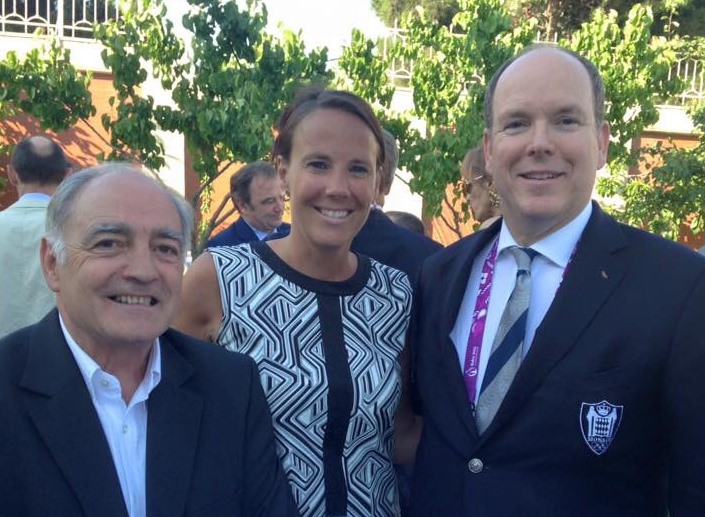
Among the guests invited by UEG, HSH the Prince of Monaco made the trip to the NGA in order to follow the first qualifying competitions. Alongside with the UEG President Georges Guelzec (FRA), they all spoke of the development of sports, especially at the European level, on the wake of contacts made at the recent Games of the Small States of Europe, which took place in early June in Reykjavik (ISL). 

Image
Body

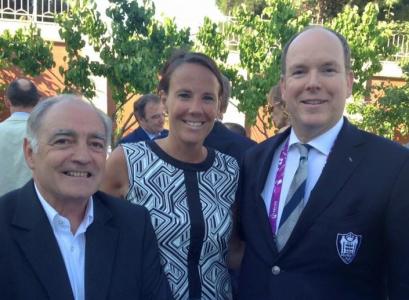
From left to right: UEG President Georges Guelzec (FRA), UEG Director Kirsi Erofejeff-Engmann (FIN) and His Serene Highness the Sovereign Prince of Monaco

Date
Show everywhere on the website
On

European Week of Sport September 2015

Category
Lead image
Paragraph
Body

The European Week of Sport is an initiative of the European Commission and its Commissioner for Education, Culture, Youth and Sport, Tibor Navracsisc. It will be held for the first time this September, from 7th till 13th, all over Europe. The aim is to get people moving, fittingly the motto –and hashtag- of the event is #BeActive.

UEG is extremely proud to be associated with this project as one of the partners of the European Commission. We are involved in 3 events:

1.      Opening of the European Week of Sport in the European capital Brussels (BEL) on Monday 7th September

2.      Open day at gymnastics clubs all over Europe on Saturday 12th September

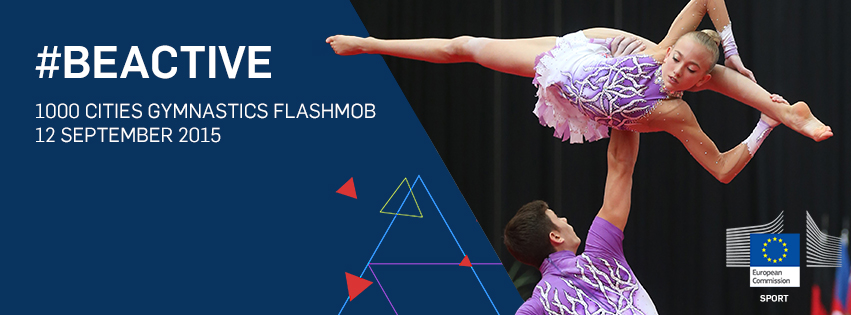
3.       ‘1000 Cities Gymnastics Flash Mob’ all over Europe on Saturday 12th September at 12:00 CET

Opening of the European Week of Sport, 7th September, Brussels (BEL)

2 gym clubs from Belgium will perform UEG’s Flash Mob live at 10am in Brussels. In several other capitals gym clubs will also perform the Flash Mob as a symbol of the parallel opening of the Week across Europe. During this opening a video of our Flash Mob training in Helsinki during the World Gymnaestrada will be shown in other European capitals to promote our ‘1000 Cities Gym Flash Mob’ on 12th September.

Open day at gymnastics clubs all over Europe on Saturday 12th September

UEG invites gymnastics clubs all over Europe to open their doors to friends, family, neighbors, total strangers and share your love and passion for gymnastics. Be active, do gymnastics!

 ‘1000 Cities Gymnastics Flash Mob’ all over Europe on Saturday 12th September at 12:00 CET

On Saturday 12 September 2015 at 12:00 CET gymnasts all over Europe will perform UEG’s FlashMob to show their love for gymnastics! Guy Maeder (SUI) choreographed it, here is the link:  https://www.youtube.com/watch?v=En5vLHAfF8c

Want to participate? Let us know by sending an e-mail to tgerets@ueg.org. Thanks!

UEG organises a Clip contest: send a video of maximum 1’30’’ of you and your gym friends training or performing the Flash Mob in the gym, outside or in a very special place to 1000citiesflashmob@gmail.com and this will be published on our Facebook page! The most original video will win a prize!

For more information about this event, please contact us via info@ueg.org

Let's get 1000 cities together!

Image
Date
Show everywhere on the website
On

Between titles and Olympic qualification

Category
Disciplines
Lead image
Paragraph
Body

The World of Rhythmic Gymnastics is in full swing. The 34th World Championships in Stuttgart (GER), from 7 to 13 September 2015, determine the participants of the Rio 2016 Olympic Games. Gymnasts and choreographers are aware. The IOC allots 96 places to the discipline, 14 groups (70 gymnasts) and 26 individual athletes. That’s all!

Gymnastics close to its audience.

It’s the third Rhythmic Worlds organised by the DTB, the German Gymnastics Federation. The first took place in Munich in 1981, followed by Berlin in 1997. Noteworthy, it was during those last Championships, held in the Max Schmeling Halle, that the Longines Prize of Elegance was inaugurated. The name of Russia’s Natalya Lipkovskaya was the first on this prestigious list.

In Stuttgart, in total 285 women will dream of becoming an Olympian, or of a World title, as soon as they set foot onto the beige floor, of constructor Spieth, in the middle of the Porsche Arena. It’s a safe bet that the 5000 seats available for each session will be fully booked quickly by the spectators of Stuttgart and its region, where the passion for gymnastics is widely-known.

Talking statistics, we note that of the 58 participating federations, 37 are European, represented by 173 gymnasts, of which 98 individuals and 75 composing 15 groups.

Too much Europe?

In Munich in 1981, four of the five gold individual medals were won by the Bulgarians (Anelia Ralenkova, Lily Ignatova). In Berlin in 1997, Ukraine’s Olena Vitrychenko won fourof them, compared to only one each won by the Russian gymnasts Yana Batyrchina and Natalya Lipkovskaya.

In 2015, in Stuttgart, all eyes and all forecasts turn to the Russian camp and to Yana Kudryatseva and Margarita Mamun particularly. The first has the potential to grab all 5 out of 5 titles, a feat which was done before her twice by compatriot Evgenia Kanaeva who claimed all gold medals of the 2009 and 2011 World Championships, held in Mie and in Montpellier respectively.

While some welcome this Russian dominance, to which we can associate the omnipresence of Belarus, Ukraine and Bulgaria in the medal positions, it is also feared that these European monuments make too much shade for the other continents. A European dominance, somewhat evasive, could spark a reaction of the same type that led to the creation of, in 1978 in Toronto (CAN), the 4 continents championships. Without Europe!

A format to which the FIG Congress of Marrakech in 2000 put an end.

Date
Show everywhere on the website
On